

In recent West Asian conflicts, desalination plants have emerged as key infrastructure targets in military operations.This development raises an important question: why do desalination facilities become such crucial targets in certain regions?
In many parts of the world, urban water supplies mainly come from rivers, lakes, or groundwater systems. In West Asia, however, most countries are located in arid or semi-arid regions where rainfall is scarce and surface water resources are extremely limited. Many countries have few stable river systems and very few natural lakes, while long-term reliance on groundwater alone cannot meet the growing demand for urban and industrial water. Given these environmental constraints, finding a stable new water source has become an essential challenge for regional development.
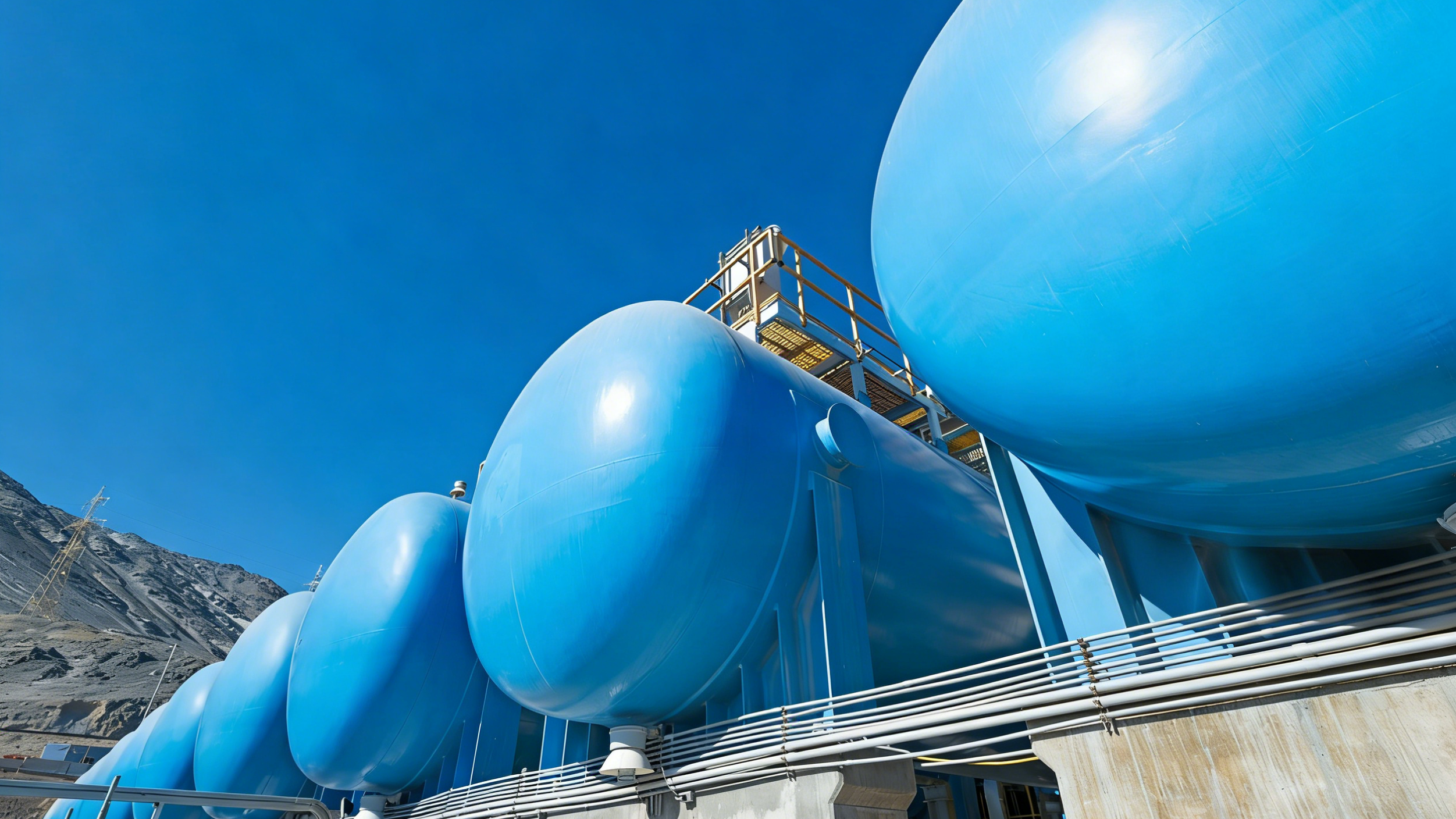
At the same time, several Gulf countries in West Asia have long coastlines and abundant seawater resources. However, seawater contains a large amount of dissolved salts, with salinity typically around 35,000 ppm—far above the level suitable for drinking water—making it unsuitable for direct domestic or agricultural use. To make use of this vast resource, specialized treatment technologies are required to separate salts and impurities from seawater and convert it into usable freshwater. This process is known as seawater desalination.
Given these geographic and resource conditions, desalination has gradually become one of West Asia’s most vital water sources.Unlike many regions of the world that still rely primarily on natural freshwater sources, several Gulf countries have made desalination the core of their urban water supply systems. According to a report by the French Institute of International Relations (IFRI), about 90% of Kuwait’s drinking water demand comes from desalination; in Oman the figure is around 86%; in Saudi Arabia about 70%; and in the United Arab Emirates, desalination also plays a major role in supplying cities. For these countries, desalination plants are not only industrial facilities but also essential infrastructure supporting urban life and economic activity.

When urban water supply depends heavily on desalination systems, the stable operation of these facilities becomes particularly critical. If a desalination plant stops operating or is damaged, urban water supply can come under pressure in a very short period of time. In many Gulf countries, desalination plants are also built alongside power generation facilities, relying on electricity systems to provide the energy required for seawater treatment. As a result, these sites often underpin both water and power supply systems, making them key infrastructure whose importance draws attention in times of conflict.
In fact, desalination has become an important water resource solution worldwide. According to the International Desalination Association, more than 150 countries now produce freshwater using desalination technologies. A 2022 report by the French Institute of International Relations (IFRI) estimates that more than 21,000 desalination plants are currently in operation globally, with the industry growing at an annual rate of approximately 6% to 12%. As technology advances and water stress intensifies, more coastal regions are incorporating desalination into their long-term water supply strategies.
Because of this highly concentrated and vulnerable dependence, desalination facilities can also take on an unusual role in geopolitical and military dynamics.
Among modern desalination systems, reverse osmosis (RO) has become the most widely used treatment technology. Under high pressure, seawater passes through a semi-permeable membrane structure: water molecules move through the membrane while salts and most impurities are retained, enabling the production of freshwater. Compared with earlier thermal distillation methods that rely on evaporation and condensation, reverse osmosis systems generally offer higher energy efficiency and more flexible plant design, which is why they are widely used in modern desalination projects.
For the water-stressed regions of West Asia, desalination technology has become a key force supporting both urban life and economic activity. With the widespread adoption of RO technology, coastal countries are able to obtain freshwater resources in a more efficient and sustainable way.
As a result, desalination plants in the region are not only vital water and energy hubs, but also crucial safeguards of social and economic stability. Enhancing their security and efficiency is essential to strengthening regional resilience and underscores the pivotal role of advanced water treatment technologies—such as reverse osmosis—in achieving global sustainability goals.